

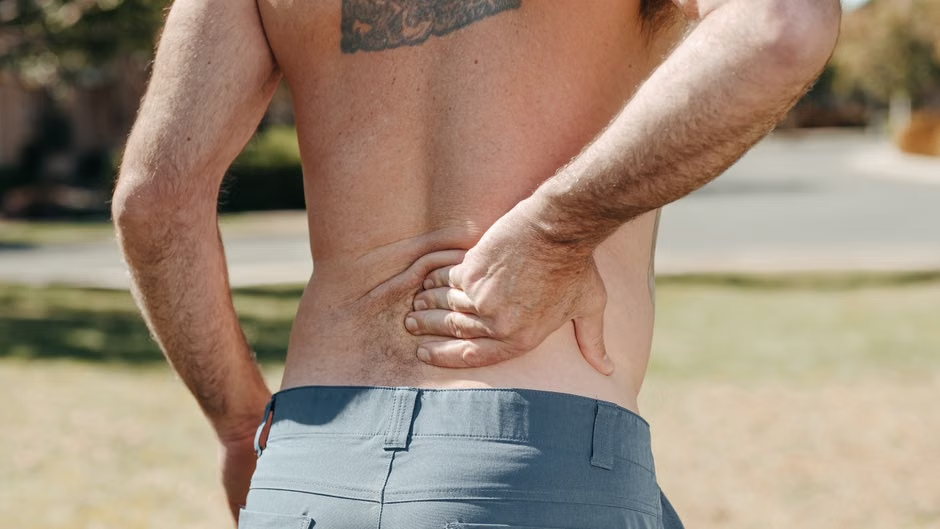
Living with a sore lower back can impact every aspect of life, from daily duties to operational readiness for service members and federal employees. The persistent ache, stiffness, or sharp, radiating discomfort can disrupt focus, limit mobility, and diminish overall quality of life. For those committed to serving our nation, maintaining peak physical condition is paramount, and chronic back pain presents a significant hurdle.
We understand the unique demands placed on our federal workforce, and the need for effective, sustainable solutions to manage pain without resorting to invasive procedures or heavy reliance on medication. Our collective experience across military, Veterans Affairs, and Public Health Service systems has shown us the profound impact that dedicated, non-pharmacologic interventions can have.
The Federal Physical Therapy Section is committed to fostering quality in patient care, professional growth, and integrated standards across all federal healthcare systems. We champion approaches that support readiness, disability prevention, and long-term cost control through evidence-based practice. Explore how physical therapy offers a powerful path to relief for your sore lower back, helping you regain strength and function, and return to duty or daily life with confidence. Visit our home page to learn more about our mission.
What is Chronic Lower Back Pain?
Chronic lower back pain is discomfort in the lumbar region that lasts for three months or longer, often persisting even after the initial injury or underlying cause has been treated. Unlike acute pain which resolves relatively quickly, chronic pain can be complex, influenced by a combination of physical, psychological, and social factors.
The lower back, or lumbar spine, is a complex structure of bones, ligaments, muscles, and nerves, designed to provide both flexibility and strength. When this system experiences sustained stress or injury, pain signals can become persistent. According to the National Institute of Neurological Disorders and Stroke (NINDS), lower back pain is one of the most common causes of job-related disability and a leading contributor to missed work days.

Can Lower Back Pain Be Treated Without Surgery?
Yes, lower back pain can often be effectively treated without surgery, with non-surgical interventions like physical therapy being the first-line recommendation for most cases. Treatment strategies focus on reducing pain, restoring function, and preventing recurrence through targeted exercises, manual therapy, and patient education.
In our practice, we’ve seen countless individuals find significant relief and improved quality of life through conservative management. Physical therapists play a forefront role in assessing acute injuries such as sprains, stress fractures, and developing specific exercise regimens. These approaches rebuild strength, flexibility, and endurance with the least amount of downtime, which is crucial for maintaining mission readiness.
“For most patients with acute and chronic low back pain, nonpharmacologic treatment with superficial heat, massage, acupuncture, or spinal manipulation is effective. For chronic low back pain, exercise, multidisciplinary rehabilitation, acupuncture, massage, mindfulness-based stress reduction, tai chi, yoga, low-level laser therapy, operant therapy, or cognitive behavioral therapy are recommended.”
How Physical Therapy Works for Lower Back Pain
Physical therapy for a sore lower back begins with a comprehensive evaluation. Our board-certified providers assess your movement patterns, strength, flexibility, posture, and nerve function to identify the root cause of your pain, not just the symptoms. This thorough assessment informs a personalized treatment plan designed to address your unique needs.
Treatment often involves a combination of methods:
- Manual Therapy: Hands-on techniques such as joint mobilization, soft tissue massage, and manipulation to reduce stiffness, improve range of motion, and alleviate muscle tension.
- Therapeutic Exercise: A guided program of exercises to strengthen core muscles, improve flexibility, and correct muscular imbalances. This includes specific stretches, strengthening routines, and endurance training.
- Movement Education: Learning proper body mechanics for daily activities, lifting, sitting, and standing to prevent re-injury and promote healthy movement patterns.
- Pain Management Modalities: Application of heat, cold, electrical stimulation, or ultrasound to reduce pain and inflammation, used as adjuncts to active therapy.
- Neuromuscular Re-education: Exercises to improve nerve-muscle communication, enhancing coordination and stability in the lumbar region.
These interventions have the potential to decrease reliance on opioids and other high-risk medications, aligning with federal priorities for safer pain care. Our collective experience in federal healthcare systems has consistently demonstrated the effectiveness of these methods in facilitating recovery and return to function.
What Is the Best Treatment for Chronic Back Pain?
The best treatment for chronic back pain is typically a multidisciplinary, individualized approach centered on non-pharmacologic interventions, with physical therapy often serving as the cornerstone. This integrated strategy addresses the physical, psychological, and social aspects of pain to provide lasting relief and improve functional capacity.
There isn’t a single “magic bullet” for chronic pain. What works best often involves a combination of therapies tailored to the individual’s specific diagnosis, lifestyle, and goals. For many service members and veterans, a treatment plan that supports their readiness and addresses the complex nature of chronic pain is vital. This is why federal physical therapists are highly skilled in developing comprehensive rehabilitation programs.
What It Treats / What To Look For: Common Causes of Sore Lower Back Pain
A sore lower back can stem from various conditions. Understanding the common culprits helps in accurate diagnosis and effective treatment. We often see federal beneficiaries presenting with:
- Muscle Strain or Ligament Sprain: Overstretching or tearing of muscles and ligaments due to sudden movements, heavy lifting, or repetitive stress.
- Sciatica: Compression or irritation of the sciatic nerve, often causing radiating pain, numbness, or tingling down one leg. This can be caused by a herniated disc, spinal stenosis, or piriformis syndrome.
- Herniated or Bulging Discs: When the soft cushioning discs between vertebrae protrude or rupture, pressing on nearby nerves.
- Degenerative Disc Disease: Age-related wear and tear on the spinal discs, leading to pain and stiffness.
- Spinal Stenosis: Narrowing of the spinal canal, which puts pressure on the spinal cord and nerves, leading to pain, weakness, or numbness.
- Spondylolisthesis: A condition where one vertebra slips forward over the one below it.
- Osteoarthritis: Degeneration of the joints in the spine.
Recognizing these indicators early can help you seek appropriate care, such as detailed clinical assessment by a physical therapist. We focus on enhancing quality care throughout the entire field by ensuring our members are equipped to diagnose and treat these varied conditions.
Can Chronic Back Pain Go Away on Its Own?
While acute lower back pain often resolves on its own within a few weeks with rest and minor adjustments, chronic back pain typically does not. Chronic conditions usually require active intervention, such as physical therapy, to address underlying causes and prevent long-term disability. Ignoring persistent pain can sometimes lead to worsening symptoms or compensatory issues.
Acute back pain is a common, often transient experience. However, when pain persists beyond 12 weeks, it shifts into the chronic domain. At this point, the pain is less about tissue damage and more about how the nervous system processes pain signals. Relying solely on rest or hoping it will disappear can prolong suffering and lead to deconditioning. This is why early and appropriate intervention is so important.
“Exercise therapy is effective for chronic low back pain. Evidence suggests that various forms of exercise are effective, but no single type of exercise has been shown to be superior to others. The efficacy of exercise therapy is likely due to multiple mechanisms, including improved strength, flexibility, endurance, and changes in pain perception.”
When Physical Therapy is the Right Choice (and when it’s not)
Physical therapy is the recommended first-line treatment for the vast majority of low back pain cases, particularly when the pain is mechanical in nature and not due to severe trauma or systemic disease. It’s highly effective for conditions like muscle strains, sciatica, disc issues, and chronic stiffness.
However, PT isn’t the only option, and it’s not always sufficient on its own. In some cases, a comprehensive approach might include:
- Medication Management: While we advocate for non-pharmacologic management of pain, short-term use of anti-inflammatories or muscle relaxants may be appropriate in acute phases under medical supervision. For chronic pain, medication is often considered after conservative measures.
- Injections: Epidural steroid injections or nerve blocks can offer temporary relief for severe nerve pain, allowing patients to participate more effectively in physical therapy.
- Acupuncture: Some patients find relief through complementary therapies like acupuncture, which is a traditional Chinese method used for pain relief. While not a primary treatment, it can be a useful adjunct for some individuals.
- Surgery: Spine surgery is typically reserved for a small percentage of patients with severe, persistent pain that hasn’t responded to extensive conservative treatment, especially in cases of neurological compromise (e.g., severe weakness, bowel/bladder dysfunction). This might involve disc repair, fusion, or decompression.
Our approach ensures that federal physical therapists understand these nuances, allowing us to refer to or collaborate with other specialists when needed. This cross-agency communication and patient-centered perspective helps provide high quality care to our nation’s servants.
What to Expect from Physical Therapy for Back Pain
When you commit to physical therapy for your sore lower back, you can expect a collaborative journey toward improved function and reduced pain. Relief often isn’t instant; it’s a gradual process, but one with significant, lasting benefits. Initial sessions focus on acute pain reduction and education, with measurable progress often noted within a few weeks.
Within the first 2-4 weeks, you’ll likely experience a decrease in pain and an improvement in your ability to perform daily activities. Over 6-12 weeks, as you progress through your exercise program, you’ll build strength, improve endurance, and gain better control over your body’s movements. Long-term success, extending beyond three months, often depends on consistent adherence to a home exercise program and application of learned movement principles.
Our goal is not just temporary relief but empowering you with the tools and knowledge for self-management, fostering long-term spinal health. This focus on long-term wellness contributes to operational readiness, disability prevention, and long-term cost control.
Practical Tips for Managing Your Sore Lower Back at Home
Taking an active role in your recovery is key to managing a sore lower back. Here are practical tips you can incorporate into your daily routine, many of which are taught by physical therapists:
- Stay Active (Within Limits): Gentle movement is often better than prolonged bed rest. Walking, swimming, or cycling can help maintain mobility and blood flow. Avoid activities that worsen your pain, but don’t shy away from movement entirely.
- Apply Heat or Cold: For acute pain or muscle spasms, cold packs can help reduce inflammation. For chronic stiffness or muscle aches, heat packs can increase blood flow and relax muscles.
- Practice Good Posture: Whether sitting, standing, or lifting, maintaining proper spinal alignment minimizes stress on your lower back. Use a lumbar support when sitting for extended periods, and lift with your legs, not your back.
- Perform Gentle Stretches: Simple stretches like knee-to-chest, pelvic tilts, and cat-cow can improve flexibility and relieve tension. Always move slowly and stop if you feel sharp pain.
- Strengthen Your Core: A strong core (abdominal and back muscles) provides essential support for your spine. Incorporate exercises like planks, bird-dog, and gentle crunches as advised by a physical therapist.
- Manage Stress: Stress can exacerbate muscle tension and pain perception. Techniques like deep breathing, meditation, or yoga can be beneficial. Consider exploring professional development resources for holistic wellness through our professional development initiatives.
Remember, while these tips can offer relief for knee joint pain and general back discomfort, they are not a substitute for professional guidance. A physical therapist can provide a tailored plan, particularly for specific issues like pain sciatica relief or round ligament pain during pregnancy, which require specialized attention.
Managing a sore lower back requires dedication and an informed approach. The journey to recovery is unique for everyone, but with the right guidance, it’s possible to significantly reduce pain, restore function, and improve your overall well-being. The Federal Physical Therapy Section is here to support federal physical therapists in delivering the highest quality non-surgical care, ensuring service members, veterans, and other federal beneficiaries remain mobile, independent, and mission-ready. We invite you to explore the extensive resources and community we offer, furthering excellence in federal physical therapy practice.